
NAP処理の特徴は、自社開発したメディア
メディアは異形状で硬度の高い突起を形成し、比重1.7前後でメディアサイズはRa100㎚で異形状φ35㎛、Ra300㎚で異形状φ45㎛となります。
メディアの投射方法は、比重の軽いメディアなので、低圧吹付で回転させながら硬度の高い突起で金属表面に凹凸形成する。(イメージはコンペイトウを回転させながら突起で凹凸形成する)

【ブラスト機の導入経緯】
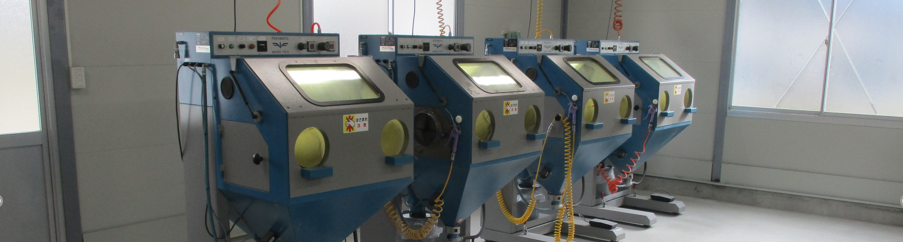
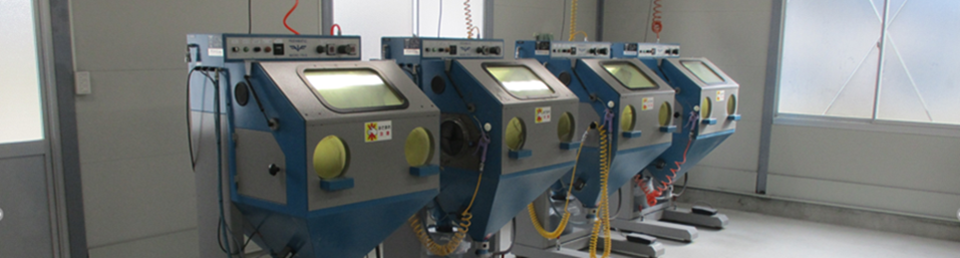
イエプコ製ブラスト機は基本構造が、シンプルで低比重メディア用に改良するのも容易でメンテナンス等、簡単に弊社で行っています。
【NAP処理加工の技術ノウハウ】
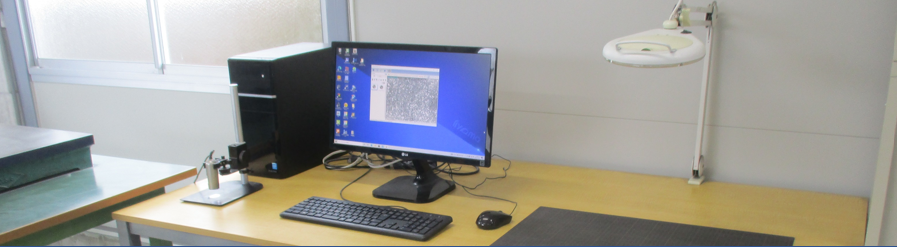
正確な凹凸の㎚Raは、富山県工業技術センター(現在の富山県産業総合研究所)で、走査型プローブ顕微鏡で画像撮影データを撮り、撮影試験片を弊社マイクロスコープ230倍と画像比較を繰り返して、Ra100㎚とRa300㎚を判断できるようになりました。
硬度の高い硬質クロムメッキ(膜厚3~5㎛Hv・Hv1000)は、エンジンオイル10W-30SL高粘度で1.5倍・230倍でマイクロスコープで親油性確認しておいます。下記の動画を、ご覧ください。
English
Processing technology of NAP treatment.
The feature of NAP processing is that it is a media developed in-house
The media forms a heterogeneous and highly hardened protrusion, and the media size is φ35 μm for Ra 100 nm and φ45 ㎛ for Ra 300 nm at a specific shape of around 1.7.
The projection method of media is a medium with a light specific gravity, so it is rotated with low-pressure spraying and uneven on the metal surface with high-hardness protrusions. (The image is formed by a protrusion while rotating the compeitou)

History of the introduction of blasting machines
The basic structure of the JEPCO blasting machine is simple, easy to modify for low specific gravity media, and easy to maintain.
Technical know-how of NAP processing
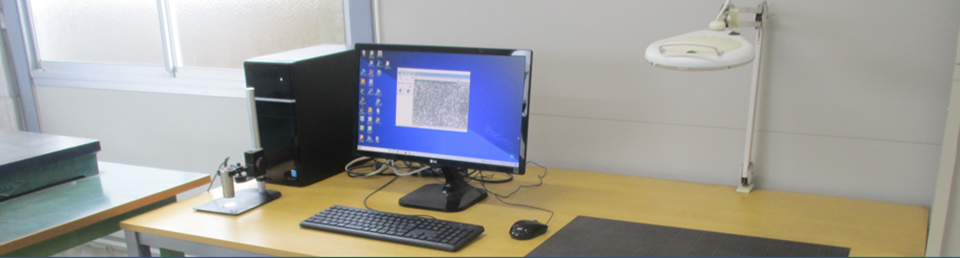
The accurate uneven nm Ra can now be determined between Ra100nm and Ra300nm by taking imaging data with a scanning probe microscope at the Toyama Prefectural Industrial Technology Center (now the Toyama Prefectural Institute of Advanced Industry) and repeatedly comparing the image of the photographed specimen with our 230x microscope.
The high hardness of hard chrome plating (film thickness 3~5μmHv・Hv1000) is confirmed to be lipophilic with a microscope by using 1.5 times and 230 times the high viscosity of engine oil 10W-30SL. Please watch the video below.
If you have any questions or questions, please feel free to contact us below.
M&T Co., Ltd. Representative Director Kazuyuki Yamashita E-mail:k-yamashita@nap-mt.com
